Showing posts with label Let's Write a Wargame. Show all posts

Tuesday, 7 August 2018

Newcromunda: 5-a-side team selection

Following the success of the Frostgrave solo game, I wondered if it would be possible to adapt the Necromunda rules (the old ones) for that sort of game.

One thing that I liked about the Frostgrave solo game was the very small sizes of the sides. The other solo missions continue this theme, which makes me think that small forces are ideal. So, here are proposed rules for creating 5-a-side "teams" for a generic science fiction game, somewhat like the Xcom and Shadowrun computer games. Note that this isn't supposed to represent the Necromunda setting: I'm just using those rules as they're based off 40k and work quite well to begin with.
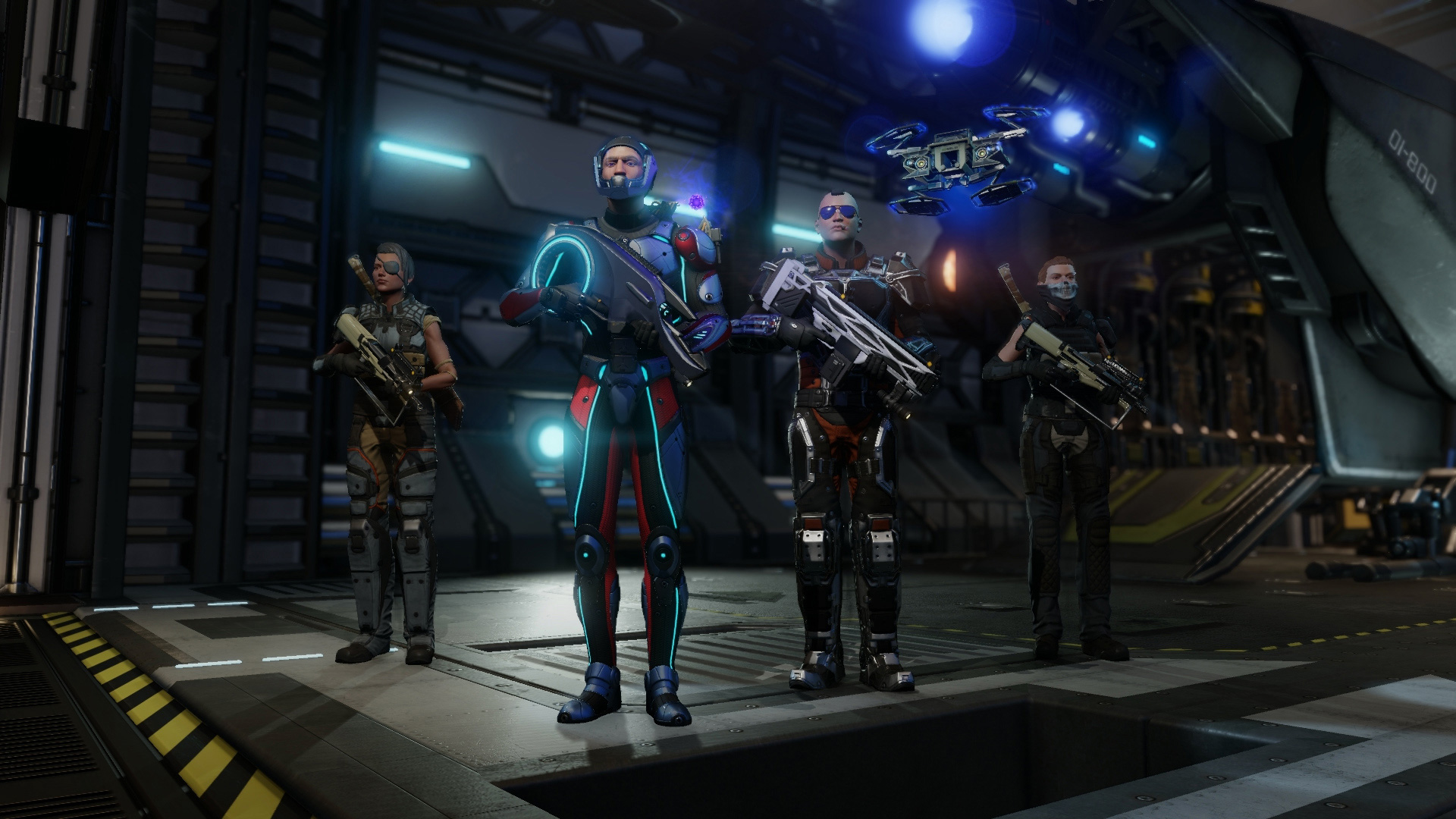
As Xcom characters go, these guys look pretty sensible.


Team recruitment
Teams may consist of up to 5 models. Players have up to 600 credits to spend. The standard rules on gang construction (only one leader, etc) still apply.

Gang affiliation
Each character must declare which gang it is from before the game starts. This doesn't represent literal gang membership: rather, it shows the skills of the character and the way they will develop. Characters cannot change gang. Teams may include characters from different gangs.

Stat upgrades
Before the first game (and only then) a player may purchase a single upgrade for any character (except wyrds and hounds), to represent training and expertise. No stat may be raised above 4 at this point, with the exception of Leadership. The costs are:

WS - 15 credits
BS - 25 credits
Strength - 20 credits
Toughness - 25 credits
Initiative - 20 credits
Leadership - 25 credits

Wyrds
Each team may include up to 1 wyrd. Wyrds cost 50 credits to recruit and gain experience in the same way as juves. They operate as per the rules in the Outlander supplement, but they come with no equipment at all. Wyrds may choose to re-roll to see what powers they get between games, or retain the same powers.

Hounds
Each team may purchase up to 3 hounds. Hounds follow the rules for wolf spiders in the Outlander supplement. Hounds cost 35 credits each. They do not gain experience. If a hound has to roll on the serious injury chart, it may choose not to and to miss the next game instead.

Bottle rolls
Bottle rolls only occur when over half of the team has been taken out of action (so, in the case of a five-man team, when three characters have been removed).

Tuesday, 7 February 2017

Who Goes First? How Turns Work


Activating a Model

In order for a model to do anything at all, it has to "activate". When a model is activated, it must immediately do everything its player intends for it to do that turn. Once this is done, another model is activated. What this means is that you can't move one model, move another, and then shoot with the first model. It's Model A, then Model B, then Model C. 


Game Turns

A “game turn” lasts from the point where no model has activated this turn to the point where the last model has finished activating – in other words, it’s the time it takes for everyone on the table to “have their go”. Unlike chess, draughts or Warhammer, the sides don’t move by player, so it isn’t a case of one player moving all their guys and then the next player moving all of theirs. This keeps the game fluid and means that both players are constantly involved.

A game will usually take somewhere between 6 or 8 game turns - so each model will have the chance to activate between 6 or 8 times

Priority

Priority represents which of the players has the edge this turn where a number of models have the same initiative. It is used to “tie-break” where initiative scores are equal. If you have the turn counter, you can activate a model first.

Every game turn, Priority passes to the other player.

If in doubt, add random clip art.


Order of Activation

Models activate in order of initiative. The models with the highest initiative – usually heroes – move first. A model with Initiative 10 will activate before one with Initiative 9. Where two or more models have the same initiative, the players take it in turn to activate their models. The player with the turn counter gets to move the first model. Then, when one player runs out of models with that initiative, the other player can move all his remaining models with that initiative.

So: I have one model with Initiative 10, and you have three models with Initiative 10. When the turn starts, because 10 is the highest initiative score on the board, the models with that score activate first. You have Priority this turn, and so you can activate a model with Initiative 10 before me. You activate one of your Initiative 10 models. I then activate my model with Initiative 10. You then activate your remaining models with Initiative 10, one after the other.

When neither of us has any models left to activate with Initiative 10, we go on to models with Initiative 9, and so on until we have run out of models. At that point, the game turn ends, Priority goes to the other player, and a new game turn begins.

Saturday, 28 January 2017

Actually, You Are A Statistic


As with most wargames, each model in the game is described by a set of statistics that, between them, show what its abilities are. In the interest of keeping the game simple, there are five statistics, or stats, which all models have.

Initiative: the quickness of a model to react. The main use for initiative is to determine when a model can activate. Models with a higher initiative get to move and fight before those of a low initiative. As such, initiative is very important, simply because it enables you to dispose of your opponent before he can dispose of you.

Move: the distance a model can move per turn. Moving counts as one of the two actions a model can make per turn. Charging is a special sort of moving that allows a model to move twice its normal move distance and attack (more about that soon). There are three basic speeds of movement. Slow models move 3” per move and charge 6”. Normal models move 4” and charge 8”. Fast models move 6” and charge 12”.

Fight: the ability of a model to attack and cause injury to other models. This covers both hand to hand combat and shooting. There are three basic levels of skill in fighting: recruit, elite and hero. The stat covers both hitting and doing meaningful damage. Most models will have the same Fight for close combat and shooting. Certain models, such as dogs and other animals, will have no ranged Fight at all.

Wounds: the amount of damage a model can take before it is considered dead, deactivated or otherwise out of the game. The vast majority of models have one wound, so they are removed from the table if they take any damage.

Destiny: the degree to which the model is favoured by chance, fate or the gods, whether manifested through villainy or moral fibre. Only heroes have this stat. Destiny points are used during the course of the game to allow heroes to reroll their own dice or compel the enemy to reroll theirs, in the hope of turning a miss into a hit or vice versa.

And that's it.

Monday, 23 January 2017

Let's Write a Wargame!

Wargaming: fun for all the family.


It had to happen, I suppose. Making your own rules is to gaming what building robots out of plasticard is to model kit assembly: kind of impressive, but probably more hassle than its worth - even assuming that anybody will want to use your creation. However, over the last few years, I've become increasingly dissatisfied with 40k and the more complicated board games, such as Zombicide. Most of the big board games I've tried to play have ended up feeling like a stunted wargame rather than anything lighter (with the exceptions of Shadows of Brimstone, which is really good, and Sedition Wars, which is just bewildering).

So I am going to write my own rules, and I'm going to write them here to force myself to see this through. In order to get the most fun out of this project, I'm going to write a statement of intention, just how they do in middle management. Yay!

This game is going to be a fast, simple wargame to be played on a tabletop. Model count will be low. Models will be moved individually and not as units. Rules will be streamlined as much as possible. In particular, I want to avoid the roll to hit/roll to wound/roll for armour structure of Warhammer games.

As many models as possible will have single wounds. I won't do vehicles - at least, not yet.

The aim will be to produce rules that can cover fantasy and science fiction settings, as well as Victorian or WW2 type stories, mainly by giving different names to weapons and enemies. Monsters will be fairly generic, at least to start with. "Heroic" characters will be possible, like Indiana Jones or Luke Skywalker, able to fight large numbers of enemies. Some sort of character development and/or enemy generation table would be nice - but let's not run before we can walk.

Wish me luck.